
Rights groups warn Bangladesh’s new Human Rights Bill could create ‘symbolic’ watchdog
A coalition of 13 international and Bangladeshi human rights organizations on Monday urged Bangladesh’s government to substantially revise the proposed National Human Rights Commission (NHRC) Bill, 2026, warning that the legislation would weaken the country’s top rights watchdog and undermine accountability for serious abuses.
In a joint statement released from multiple cities including Dhaka, Bangkok, Geneva, London, New York and Washington, the organizations said the draft law represents “a worrying regression” from the National Human Rights Commission Ordinance, 2025, which was scrapped by the government in April.
The signatories — including Amnesty International, Human Rights Watch, CIVICUS, the International Federation for Human Rights (FIDH), Odhikar and the World Organisation Against Torture (OMCT) — argued that the proposed legislation would erode the commission’s independence, narrow its mandate and increase executive control over its operations.
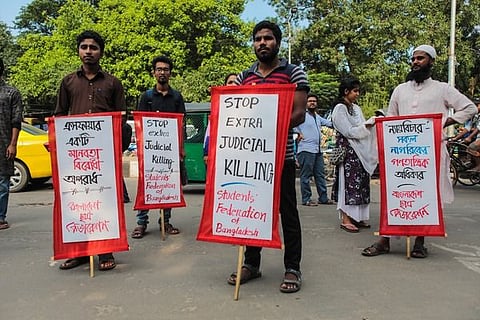
“At a time when Bangladesh requires stronger oversight mechanisms to address enforced disappearances, torture, custodial deaths, extrajudicial killings and shrinking civic space, the proposed bill moves in the opposite direction,” the groups said.
A key concern raised by the organizations is the composition of the NHRC selection committee. Under the draft bill, senior government officials, including the law and home affairs ministers, would play a central role in appointing commissioners, while provisions for independent representation included in the 2025 ordinance have been removed.
The groups warned that the changes could politicize appointments and compromise the commission’s ability to investigate allegations against state institutions.
They also criticized provisions governing complaints against law enforcement and security agencies, saying the bill effectively allows those institutions to investigate allegations against themselves.
According to the statement, the commission would be required to rely primarily on reports submitted by the agency accused of wrongdoing or by the government, rather than conducting independent investigations.
“The result would enable institutionalized impunity for the very violations that most urgently require independent scrutiny,” the organizations said.
The coalition further argued that the bill dilutes guarantees for representation of women, ethnic minorities and marginalized communities and strips the commission of several functions previously included in the 2025 ordinance, including protecting human rights defenders, engaging with civil society, reviewing legislation and advising on international human rights treaties.
The groups warned that the proposed framework could jeopardize Bangladesh’s compliance with the Paris Principles, the international standards governing national human rights institutions, potentially affecting the country’s standing within global human rights mechanisms.
Calling for broad public consultation before the bill is enacted, the organizations urged the government to restore safeguards ensuring the commission’s operational and financial independence, grant it authority to investigate all state actors, including security forces, and reinstate its broader human rights mandate.
“Unless substantially amended,” the statement said, “the bill risks creating an institution that retains the appearance of a human rights commission while lacking the powers and independence necessary to fulfil its purpose.”