
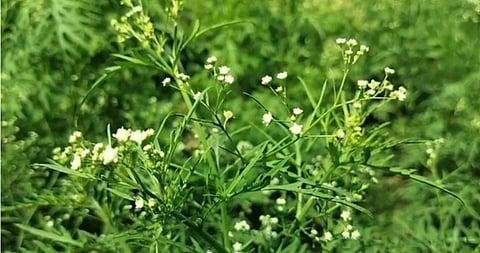
Invasive parthenium weed threatens farms, public health in Chuadanga
At first glance, it appears harmless. Standing two to three feet tall, with lush green leaves and clusters of tiny white flowers, the plant closely resembles coriander. Yet beneath its innocent appearance lies a growing threat to agriculture, public health and livestock.
Parthenium (Parthenium hysterophorus), one of the world's most invasive and toxic weeds, is spreading rapidly across Chuadanga, raising alarm among farmers, agricultural scientists and health experts.
They warn that unless the weed is contained now, it could have serious long-term consequences.
Field visits and local enquiries found the weed spreading across all four upazilas of the district – Chuadanga Sadar, Alamdanga, Damurhuda and Jibannagar.
It is increasingly found along roadsides, railway tracks, fallow land, border areas and even around cropland. Yet most residents remain unaware of the plant's identity or the dangers it poses.
Native to North and South America, parthenium is believed to have entered Bangladesh from neighbouring India before gradually spreading across different parts of the country.
Although the plant has a relatively short life cycle of just three to four months, a single specimen can produce thousands of seeds several times during its lifespan. The seeds are easily dispersed by wind, rainwater, vehicles and animals, enabling the weed to spread rapidly and colonise new areas.
Farmers said the weed has become noticeably more widespread over the past few years.