
The Ziaur Rahman assassination: How the killing unfolded and what followed
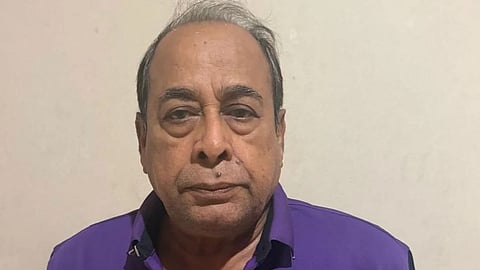
The arrest of former army officer Mozaffar Hossain, a fugitive convicted in the assassination of former president Ziaur Rahman, has brought renewed attention to one of Bangladesh's most consequential political killings.
More than four decades after the assassination in Chattogram, most of those convicted have been executed, died, or spent years evading arrest. This report revisits how the assassination unfolded and what became of those found guilty.
The assassination at Chattogram Circuit House
On May 29, 1981, President Ziaur Rahman travelled to Chattogram on a two-day visit to resolve an internal dispute among local leaders of the Bangladesh Nationalist Party (BNP), the party he founded. After a day of meetings, he stayed overnight at the Chattogram Circuit House.
At around 4:00am on May 30, a group of army officers launched an assault on the Circuit House. Military vehicles entered the compound while firing, before armed officers stormed upstairs to the president's room. Ziaur Rahman was shot dead inside.
Two army officers assigned to his security – Colonel Ehsan and Captain Hafiz – were also killed.
News of the assassination first spread through Chattogram Radio later that morning. The government announced that a self-proclaimed “Revolutionary Council” was behind the attack.
Under the Constitution, Vice-President Justice Abdus Sattar assumed office as acting president and declared a nationwide state of emergency. Army Chief Lieutenant General Hussain Muhammad Ershad ordered the rebel officers to surrender, warning them of strict action if they refused.

Secret burial, state funeral and military trial
After the assassination, Ziaur Rahman's body was taken from the Circuit House and secretly buried at the foot of a hill in Rangunia, Chattogram, alongside the bodies of Colonel Ehsan and Captain Hafiz.
Government forces located the grave on June 1 after regaining control of Chattogram. The bodies were exhumed, taken to Chattogram Cantonment and later flown by helicopter to Dhaka.
Following a state funeral attended by hundreds of thousands of mourners, Ziaur Rahman was laid to rest near Crescent Lake in front of the Jatiya Sangsad Bhaban.
The attempted military coup collapsed within two days. Major General Abul Manzoor, identified as the leader of the rebellion, fled Chattogram before surrendering to police in Hathazari.
He was later handed over to the military and was subsequently killed while in custody. Several other officers linked to the uprising, including Lieutenant Colonel Matiur Rahman and Lieutenant Colonel Mehbubur Rahman, were also killed during the operation to crush the rebellion.
A military court later tried 18 army officers over the assassination and the failed coup. Thirteen were sentenced to death, while the remaining five received prison terms.
Twelve of those sentenced to death were executed soon after the verdict. The thirteenth was executed about two years later after recovering from bullet wounds sustained during the events of May 30. Separately, 20 officers were dismissed from the Bangladesh Army.
The case returns to the spotlight
The latest development came with the arrest of retired Major Mozzaffar Hossain, one of the fugitives convicted in the assassination, ending more than four decades on the run.
Police arrested the 77-year-old from a house in Banani, Dhaka, on July 16 before handing him over to the military police the following day. Authorities said he had remained in hiding since the assassination in 1981.
Investigators say the breakthrough came during a separate investigation by the International Crimes Tribunal into alleged crimes against humanity committed during the July uprising.
Prosecutors said the tribunal’s investigation agency carried out a forensic examination of the mobile phone of retired Lieutenant General Masud Uddin Chowdhury, who was arrested earlier this year in that case.
The analysis of call detail records uncovered several suspicious phone numbers that investigators could not identify. The numbers were forwarded to police for further examination.
ICT Prosecutor Tanvir Hassan Zoha told Daily Waadaa that police subsequently linked the numbers to Mozzaffar Hossain through their own intelligence and technical analysis, leading to his arrest after 45 years as a fugitive.
Historical accounts of the assassination identify Mozzaffar as one of the armed army officers who entered the Chattogram Circuit House during the attack on President Ziaur Rahman. Following the assassination, he fled and remained at large despite a reward being announced for information leading to his capture.
His arrest leaves only a small number of convicted fugitives yet to be traced, while bringing renewed public attention to one of the most significant political assassinations in Bangladesh’s history.