
Bangladesh targets $10b trade with Japan: Bobby
Bangladesh is aiming to increase bilateral trade with Japan to $10 billion in the coming years, with the government stepping up efforts to attract Japanese investment in high-value sectors, State Minister for Primary and Mass Education Bobby Hajjaj said on Tuesday.
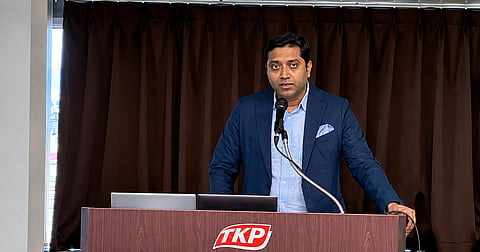
Speaking at the Bangladesh Investment Promotion Seminar in Osaka, Bobby said bilateral trade between the two countries currently stands at around $3.5 billion but holds significant potential for expansion.
The seminar was jointly organised by the Japan External Trade Organization (JETRO), the Bangladesh Embassy in Japan and the Osaka Chamber of Commerce and Industry.
Bobby said progress on the proposed Economic Partnership Agreement (EPA) between Bangladesh and Japan, along with the establishment of a dedicated special economic zone for Japanese investors, would help elevate bilateral economic ties and create a more favourable business environment.
He described Bangladesh as a strategic investment destination, saying its location at the crossroads of South Asia and ASEAN offers Japanese businesses access to a regional market of more than three billion consumers.
"Bangladesh is not just a promising investment destination but a strategic economic bridge between South Asia and ASEAN," he said.
Highlighting Bangladesh's economic performance, Bobby said the country's economy now exceeds $500 billion and has sustained growth of more than 6 per cent over a long period, remaining above 4.5 percent despite global economic challenges.
He said the government aims to transform Bangladesh into a $1 trillion economy by 2034.
Bobby said Bangladesh's workforce of more than 70 million young people remains one of its greatest competitive advantages, while rising per capita income of over $3,000 is expanding the domestic market and creating new opportunities for investors.
He identified machinery and light engineering, industrial components, automobile and electric vehicle parts, electronics, pharmaceuticals, active pharmaceutical ingredients (API), medical equipment, diversified jute products, agro-processing, food security, cold-chain logistics, renewable energy, port and logistics infrastructure, industrial park development, robotics, education technology and skilled workforce development as key sectors for Japanese investment.
He also highlighted opportunities for collaboration with organisations such as Artec in education technology and skills development.
Referring to Japan's Meiji Restoration, Bobby said Bangladesh hopes to draw on Japan's development experience in education, technology, industrialisation, innovation and human resource development to build its future economy.
He also underscored the potential for closer cooperation in education, skills development, healthcare and medical tourism, saying Bangladesh's young and skilled workforce could help address Japan's growing labour shortage and ageing population.
Bobby thanked Japan, including the Japan International Cooperation Agency (JICA), for its longstanding support in Bangladesh's infrastructure development, education, human resource development and economic growth.
Calling on Japanese businesses to become long-term partners in Bangladesh's development, he said the two countries are entering a new phase of cooperation based on investment, trade, technology, innovation and shared prosperity.