
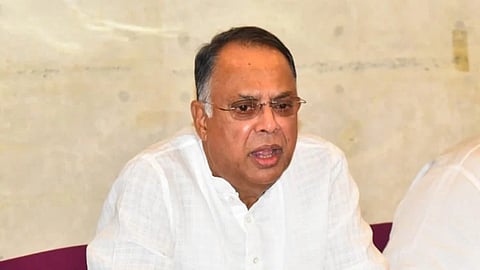
Govt considers wider private role in fuel distribution to curb black marketing: Iqbal
AI generated summary, newsroom reviewed
The government is considering allowing private companies to participate more broadly in fuel oil distribution to prevent supply disruptions and black marketing, Power, Energy and Mineral Resources Minister Iqbal Hassan Mahmood said Tuesday.
“This is not being done for any particular company. When the general law is made, it will apply to everyone,” Iqbal said at a seminar titled “Crisis in the Fuel Sector: Prospects and Path forward”, was organised by the Forum for Energy Reporters Bangladesh (FERB), in Dhaka Club.
The minister said Bangladesh did not face an actual fuel shortage despite concerns following the outbreak of the Middle East conflict, as the country had sufficient reserves.
Iqbal also said the government is working on multiple fronts to address the ongoing gas crisis and ensure a more reliable energy supply for industries.
“I understand the pain of textile entrepreneurs. If there is no gas pressure despite having buyers’ demand, rejection of products can have a huge impact on a businessman’s cash flow,” he said.
The government has been holding discussions with relevant experts and industry representatives to find sustainable solutions to the energy crisis, he said.
Iqbal said a team from a foreign country recently visited Bhola and held discussions on possible cooperation in the gas sector.
Following the visit, the minister and energy secretary held online discussions with their counterparts, while a government team also visited the country and returned on Monday.
“We are very hopeful that through collaboration with them, we can do something regarding gas in Bhola,” he said.
Iqbal said a meeting involving Prime Minister Tarique Rahman, industrialists and energy experts is expected to be held soon to discuss the ongoing crisis and possible solutions.
He said the government inherited inadequate infrastructure and stressed that development must focus not only on projects that generate financial returns but also on infrastructure needed to make economic growth sustainable.
Referring to the recent LNG supply disruption, the minister said an incident involving a fire at an LNG facility had created severe pressure on the country’s gas supply.
He said the government would carefully decide when to temporarily suspend operations for maintenance after another unit becomes operational, as it does not want industries to suffer further.
“We do not want industrialists to suffer,” he said, adding that the prime minister had already held several meetings with industry representatives since taking charge.
On coal-based power generation, Iqbal said the government is considering additional coal-fired power plants but would proceed cautiously because many developed countries have reservations about coal-fired generation and funding for such projects has declined.
The minister also said the government is seeking greater private-sector participation in energy utilities.
He said he has already appointed representatives from chambers of commerce to the boards of some power distribution entities and plans to include chamber representatives in other units, including Titas Gas.
On renewable energy, Iqbal said the government is “very aggressive” in promoting solar power and has prepared a new policy within two months to make the sector more business- and investment-friendly.
He said the policy includes incentives, including a five-year tax benefit, and expressed confidence that the government could achieve its target of generating 10,000 megawatts of solar power.
The minister said the government plans to promote rooftop solar under an OPEX model, beginning in Dhaka and gradually expanding across the country, with private investors making the required investments.
He said areas under Dhaka’s two city corporations would be divided among investors through a transparent process, allowing private companies to install rooftop solar systems and recover their investment through electricity billing arrangements.
Iqbal also said the government is considering making land available for large solar projects through an equity-based arrangement, under which the value of government-provided land could be treated as equity in the project.
On offshore oil and gas exploration, he said the government has already launched the tender process and plans to attract major international energy companies.
He said he has spoken to the US ambassador about visiting Houston in November to meet executives of major energy companies and invite them to participate in Bangladesh’s exploration activities.
Iqbal said the government inherited several major problems after taking office six months ago but had successfully overcome a number of them and remained focused on resolving the remaining challenges.
“We do not do politics here. We remain focused on solving problems,” he said.
FERB Chairman M Azizur Rahman presided over the seminar.