
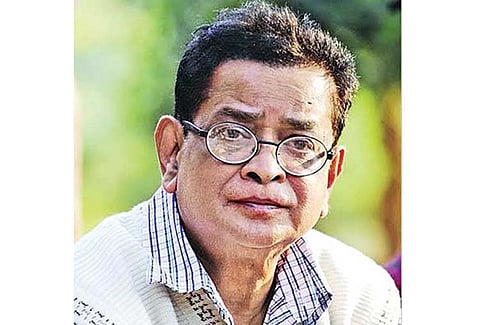
Humayun Ahmed was the greatest cultural icon of post-independence Bangladesh, Farooki says
Renowned filmmaker and former cultural affairs adviser to the interim government Mostofa Sarwar Farooki has described celebrated writer and filmmaker Humayun Ahmed as the greatest cultural icon of post-independence Bangladesh, saying his influence on the country's cultural landscape was unparalleled.
In a Facebook post on Friday, marking Humayun Ahmed's birthday, Farooki said the only figures who came close to having a comparable cultural influence were members of Bangladesh's rock generation, including Azam Khan, Ayub Bachchu and James.
Farooki said one of the greatest ways to politically weaken a nation is to make its people culturally insecure by convincing them that they have no culture or art of their own.
He said such a sense of cultural inferiority had been cultivated in Bangladesh for decades, leading previous generations to look outside the country for cultural inspiration despite having a rich heritage of their own.
Referring to Humayun Ahmed, Farooki said a section of what he described as culturally insecure gatekeepers had once attempted to dismiss the writer and undermine his contribution. However, his generation challenged that narrative and established his place in the country's cultural landscape.
"Our joys, sorrows, doubts, struggles and contradictions have colours that are uniquely our own. We need our own storytellers to tell the stories of those colours," Farooki wrote.
He said borrowing someone else's voice to tell the stories of one's own life could eventually make that life resemble someone else's.
Recalling Bangladesh's cultural heritage before independence, Farooki mentioned Lalon, Radharaman, Abbasuddin, Abdul Alim, Hason Raja, Shah Abdul Karim and Jibanananda Das among the artists and poets who helped shape the country's cultural identity.
He said Humayun Ahmed emerged as the country's storyteller in the post-independence period through his literary works.
Farooki also recalled several initiatives undertaken during his time in government to celebrate legendary Bangladeshi cultural figures.
These included a commemorative programme honouring Ustad Alauddin Khan at Lalbagh Fort, an event celebrating singer Sabina Yasmin and a documentary on Humayun Ahmed.
He said the initiative had also included plans to develop a calendar celebrating legendary Bangladeshi personalities, although he was unsure about its current status.
Farooki called for completing the calendar project and continuing such initiatives to celebrate the country's cultural icons.
He said celebrating these figures was important because cultural confidence was essential to preserving a nation's identity.