
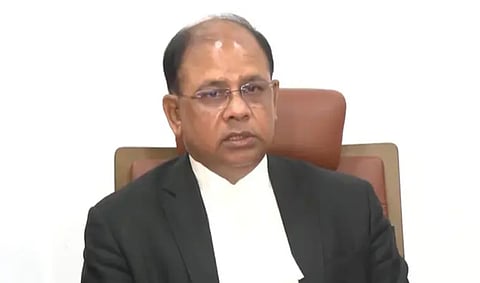
‘July uprising made it possible to bring the monsters to justice,’ says chief prosecutor
Chief Prosecutor of the International Crimes Tribunal Mohammad Aminul Islam has said those involved in enforced disappearances, killings and torture would never have faced trial had the July mass uprising not taken place.
Paying tribute to the July uprising fighters, he said their contributions had made it possible to bring the perpetrators, whom he described as “monsters”, to justice.
He made the remarks while presenting the prosecution's arguments for the second day in a case before International Crimes Tribunal-1 against former army officer Ziaul Ahsan.
During the hearing, Aminul Islam presented arguments on how the charges against Ziaul Ahsan could be established through witness testimonies and documentary evidence.
“Had the July mass uprising not taken place, these incidents would never have come to light. Perhaps these criminals would never have faced trial. These criminal activities might never have come to an end,” he said.
Claiming that crossfire, abductions and enforced disappearances had stopped since August 5, the chief prosecutor said no such incidents had taken place since the fall of the Awami League government.
“Since August 5, there has been no crossfire, no abduction and no enforced disappearance. No one has had to be martyred in the Baleshwar River. No one has had to remain detained in the TFI or JIC cells,” he said.
He argued that an uprising becomes inevitable when a ruling regime turns oppressive through years of killings and torture.
Explaining the circumstances behind the July movement, he said the sacrifices of those who took part in it had created an opportunity to bring perpetrators of serious crimes to justice.
Three charges against Ziaul Ahsan
Referring to the case proceedings, Aminul Islam said three charges had been brought against Ziaul Ahsan, with the prosecution submitting relevant documents and presenting witness testimonies in support of the allegations.
He also cited the testimony of army personnel Imrul Kayes, who had previously served as Ziaul Ahsan's bodyguard. According to the chief prosecutor, Kayes's testimony implicated the former army officer in the enforced disappearance of BNP leader M Ilias Ali.
Aminul Islam said the responsibility of a state officer was to protect the lives, property and sovereignty of the country's people. However, he alleged that the then government had corrupted state institutions and those entrusted with public responsibilities, turning them into “monsters”.
He further alleged that Ziaul Ahsan had killed hundreds of people under the protection of then prime minister Sheikh Hasina.
The chief prosecutor said killings and torture had continued for years, highlighting the severity of human rights violations in the country. Referring to crimes committed against the Rohingya community, he questioned whether the atrocities committed in Bangladesh had been any less severe.
“What happened to the Rohingya community—was anything less committed in this country?” he said.
Throughout his arguments, Aminul Islam stressed the need to ensure justice for enforced disappearances, killings and torture, arguing that the July uprising had created the opportunity to prosecute those responsible for serious human rights violations and crimes against humanity.
The prosecution is presenting witness testimonies, documentary evidence and legal arguments before the tribunal to establish the charges against Ziaul Ahsan.