
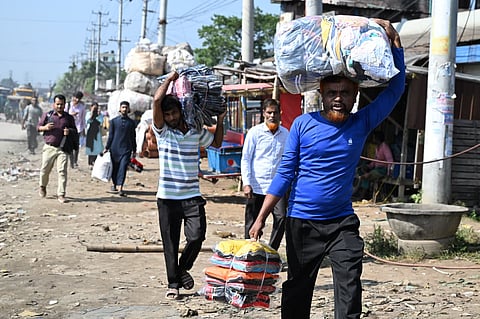
Workers return to factories in Ashulia, Savar as police clear Gazipur roads
Demonstrations by garment workers demanding higher wages eased across the country's major industrial belts on Thursday, with the situation gradually returning to normal in Ashulia and Savar.
Tensions in parts of Gazipur also showed signs of subsiding as police cleared road blockades and workers began returning to their workplaces.
Talking to Daily Waadaa, Superintendent of Gazipur Industrial Police-2 Mohammad Amzad Hossain said, “The overall situation was fairly good, although sporadic incidents of unrest were still reported at four or five locations in Gazipur. Workers came out onto the roads, but we cleared the roads within four to five minutes.”
“Workers are trying to return to work, but some miscreants are occasionally causing disturbances and getting involved in confrontations around factories. We are trying to stop this tendency,” he added.
According to Amzad, around 30 factories in Gazipur had been closed since Thursday morning.
In Ashulia and Savar, the industrial belt remained largely peaceful, with workers returning to factories and regular operations resuming, although a limited number of factories remained closed or observed general holidays or work abstentions.
In a message, Superintendent of Ashulia Industrial Police-1 Mohammad Mominul Islam Bhuiyan said, “The overall situation across the industrial belt remained under control, with all factories operating except 45.”
Of the 45 factories, 17 had declared general holidays, while 21 had been shut under Section 13(1) of the Bangladesh Labour Act, 2006. Workers at the remaining seven factories had abstained from work, he added.
The latest unrest followed the Minimum Wage Board's decision to propose a new monthly minimum wage of 17,000 taka for readymade garment workers, a 36% increase from the existing 12,500 taka.
The proposal was finalised through a vote in the early hours of November 25, following nearly 12 hours of negotiations among board members.