
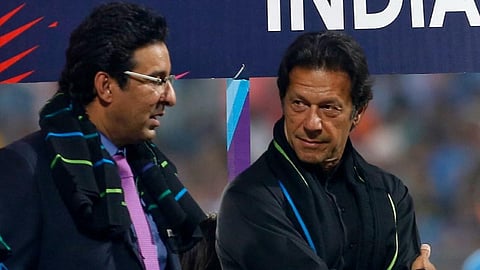
Wasim Akram voices concern for mentor Imran Khan's health in prison
Wasim Akram has become the latest prominent figure from world cricket to speak out over the wellbeing of former Pakistan captain and prime minister Imran Khan, insisting there can be no compromise when it comes to his health.
Imran, who led Pakistan to World Cup glory in 1992, has remained in custody at Adiala Jail in Rawalpindi since 2023 following his conviction in multiple corruption cases, allegations the 73 year old continues to firmly deny.
Speaking to The Athletic, Akram reflected on his personal bond with Imran, revealing the two had not spoken in three years despite the closeness they once shared during their playing days together for Pakistan.
"Imran Khan was my mentor. He's my friend, I miss him a lot. I haven't spoken to him for three years," Akram said, describing the political circumstances surrounding his old captain as deeply unfortunate.

He was careful to separate the legal proceedings from his concerns about Imran's physical condition, drawing a clear distinction between the two issues in his comments to the publication.
"The court of law is the court of law. But as far as his health is concerned, there can be no compromise on that," Akram said, echoing sentiments already voiced by several other former international cricketers in recent weeks.
Akram's intervention follows growing global attention on Imran's situation, after his sons Kasim and Sulaiman spoke publicly about their father's declining health during a Sky Sports interview conducted by Mike Atherton.
That interview reportedly prompted the Pakistan Cricket Board to consider boycotting play during the second Test against England at Lord's, with board chairman Mohsin Naqvi also serving as Pakistan's interior minister at the time.
The PCB had asked broadcasters not to air the interview, but it was eventually broadcast with only a slight delay, prompting the board to lodge a formal complaint with Sky Sports over the decision.
Addressing the reaction inside Pakistan following the interview's broadcast, Akram noted the government had since released detailed figures on Imran's prison visits and phone calls, though he remained sceptical about their accuracy.
"There was a bit of uproar here after that. I then read that the Pakistani government came up with how many visits he has had, with all the numbers included. But it's difficult to believe, and hard to know what to believe right now," he said.
Akram was quick to stress he was commenting purely as a concerned friend rather than wading into Pakistan's political landscape, choosing his words carefully to avoid any suggestion of partisan involvement.
"I'm OK. As long as I don't get too into the politics or the legal side of things I can speak my mind, nobody will tell me what to do," he said, adding that he simply wanted to share what was genuinely on his mind.
Akram enjoyed some of the finest moments of his career under Imran's captaincy, forming part of the legendary bowling attack that helped Pakistan lift the World Cup in 1992 under his leadership.
He has previously credited Imran's man management for instilling the fearless, aggressive approach that defined Pakistan's cricket throughout the late 1980s and early 1990s, both at home and on tour overseas.
Akram now joins a growing chorus of concerned voices from the sport, with West Indies great Brian Lara last week also calling publicly for Imran to be treated with proper dignity and adequate medical attention.
More than twenty former international captains, including Kapil Dev, Sunil Gavaskar and Dilip Vengsarkar, have separately written to Pakistan's prime minister Shehbaz Sharif urging improved healthcare provisions for the ailing former leader.
Among Imran's former Pakistan teammates, veteran all rounder Javed Miandad has also spoken out publicly in recent times, adding his voice to mounting pressure from within the cricketing fraternity over his wellbeing.
"We need to safeguard his health. We don't know what's happening, the government are saying his health apparently is fine. But I'm worried. I miss him a lot," Akram said, closing his remarks on a personal note.