
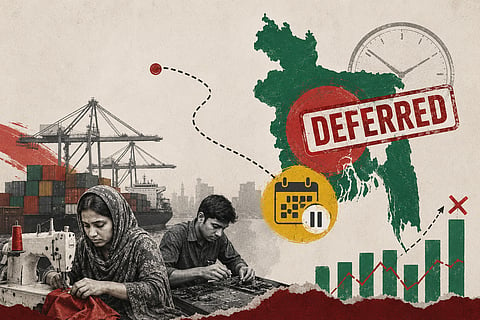
Bangladesh LDC graduation can wait, says UN panel
The United Nations Committee for Development Policy (CDP) has recommended positive consideration of Bangladesh's request to extend its preparation period for graduation from Least Developed Country (LDC) status by three years.
The nod has provided a significant boost to the country's efforts to ensure a smooth transition amid mounting global economic uncertainties.
According to a statement issued by the Ministry of Foreign Affairs on Tuesday, the CDP has informed Bangladesh that it considers an extension of the country's LDC graduation preparatory period until November 24, 2029, to be justified and appropriate.
The recommendation comes after Bangladesh formally requested the extension in February this year, arguing that a more challenging global environment, including geopolitical tensions, trade uncertainties and disruptions to energy and supply chains, could affect its readiness for graduation from the UN's list of least developed countries.
Professor Jose Antonio Ocampo, chair of the CDP, conveyed the committee's position to the Bangladesh government, noting that the country has already exceeded the required thresholds under all three graduation criteria by a substantial margin and faces little risk of slipping below them in the near or medium term.
Bangladesh was originally scheduled to graduate from LDC status on November 24, 2026, after meeting the eligibility criteria in successive reviews.
However, the government has been seeking additional time to strengthen economic resilience, prepare businesses for the withdrawal of LDC-specific trade preferences and ensure a sustainable transition to developing-country status.
The foreign ministry statement said Prime Minister Tarique Rahman had also sought the support of the United Nations Secretary-General on the matter through a letter sent on April 6.
In its assessment, the CDP acknowledged that recent developments, including instability in the Middle East, shifts in the global trading system and broader economic challenges, could affect Bangladesh's graduation preparations.
The committee noted that an extended preparatory period would allow the country to better assess these evolving risks, refine policy priorities and prepare for changes in market access and international support mechanisms after graduation.
The committee also welcomed Bangladesh's commitment to implementing its Smooth Transition Strategy (STS), a roadmap designed to minimise potential disruptions following graduation.
At the same time, it stressed that the extension should not be viewed as an opportunity to delay reforms.
Instead, the CDP urged Bangladesh to accelerate key structural reforms, including strengthening financial sector stability, increasing tax revenues, enhancing domestic resource mobilisation, diversifying the economy and improving productive capacity.
It also highlighted the need to better prepare the private sector for operating in a post-LDC environment.
The committee further underscored the importance of continued international support during both the extended preparatory period and the years following graduation, including concessional financing, technical assistance and trade-related capacity-building measures.
Bangladesh's eventual graduation from LDC status is expected to mark a major milestone in its economic development, reflecting decades of progress in income growth, human development and poverty reduction.
However, policymakers have warned that careful preparation remains essential to safeguard export competitiveness and sustain long-term economic growth after graduation.