
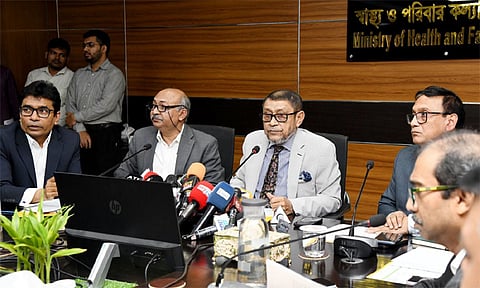
New HIV cases rise 22% in Bangladesh, men account for 85%: Health Minister
A total of 2,305 people were newly diagnosed with HIV in Bangladesh over the past year, marking a 22% increase from the previous year, with men accounting for 85% of the cases, according to Health and Family Welfare Minister Sardar Md Sakhawat Husain.
Of the newly diagnosed individuals, 60% were men who have sex with men (MSM) and male sex workers (MSW), while a significant proportion were young people. The rising number of infections among students is a particular concern for health authorities, the minister said.
He disclosed the figures at a press conference at the Ministry of Health and Family Welfare at the Bangladesh Secretariat on Sunday, marking World AIDS Day.
Presenting the HIV situation for 2026, Sakhawat said the figures covered the period from November 2025 to October 2026. During this period, a total of 2,649,653 people were tested and screened for HIV at government and private facilities across the country.
Of the 2,305 newly diagnosed individuals, 50% were MSM, 10% male sex workers, 4% people who inject drugs, 1% female sex workers and 1% members of the transgender community. Rohingyas accounted for 5% of the cases, while 11% involved expatriates who had returned home and their family members. The remaining 18% belonged to the general population.
The number of newly diagnosed cases increased from 1,891 in 2025 to 2,305 in 2026.
Age-wise, 61% of those diagnosed were between 25 and 49 years old, while 24% were aged 20 to 24. The remaining 15% belonged to other age groups.
In terms of marital status, 48% were married and an equal proportion were unmarried. One per cent were widowed, while another 1% were divorced or living alone.
HIV-related deaths also increased, with 285 people dying from the disease in 2026, compared with 254 in 2025.
However, progress has been made in bringing newly diagnosed patients under treatment, the minister said. Some 87.8% of the 2,305 people diagnosed this year were enrolled in treatment immediately after detection.
Sakhawat said HIV prevention, testing and treatment programmes were being implemented with government funding and support from the Global Fund.
HIV testing facilities are available at 23 government hospitals in 20 districts, while treatment services are provided at 16 medical colleges and district-level hospitals and eight NGO-run drop-in centres, he said.
The government is also providing free antiretroviral (ARV) medicines to 10,114 people living with HIV. The state has been bearing the cost of their treatment since 2017, he added.
Prevention programmes are being conducted among around 145,000 people from key populations in 42 districts. These include people who inject drugs, MSM, female sex workers and members of the transgender community.
The programmes include distributing HIV prevention materials, conducting tests, linking diagnosed individuals to treatment, managing sexually transmitted infections and providing peer education and awareness campaigns to encourage behavioural changes.
The minister further said HIV testing and treatment services were available in 11 prisons across 11 districts. Similar services were also being provided to the Rohingya community in Cox's Bazar, with support from development partners and non-governmental organisations.