
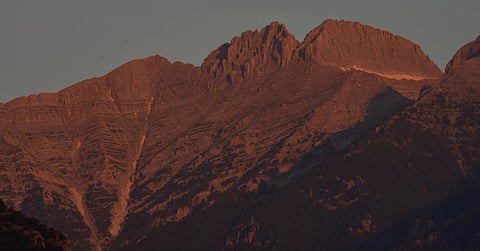
UNESCO adds Greece’s Mount Olympus, Japan’s ancient capitals to World Heritage List
UNESCO on Sunday added Greece’s Mount Olympus, Japan’s ancient capitals of Asuka and Fujiwara, and South Sudan’s Boma-Badingilo Migratory Landscape to its prestigious World Heritage List during the World Heritage Committee session in South Korea.
The committee, meeting in the southeastern city of Busan through Wednesday, is reviewing dozens of nominations from around the world.
Mount Olympus, famed in Greek mythology as the home of the 12 Olympian gods, was recognized as a mixed cultural and natural heritage site after a 12-year campaign by Greece. Standing 2,918 meters above sea level, the country’s highest peak is renowned for both its mythological significance and rich biodiversity.
Greek officials welcomed the recognition, saying it reinforces the country’s commitment to preserving the mountain’s unique natural environment amid concerns that increased tourism could put additional pressure on the site.
Japan’s newly listed heritage property comprises 19 archaeological sites linked to the ancient capitals of Asuka and Fujiwara in Nara Prefecture. Dating from the sixth to eighth centuries, the sites include the buried remains of imperial palaces, government buildings, Buddhist temples and tombs that reflect the formation of Japan’s first centralized state under strong Chinese influence.
Japanese officials said the designation would help preserve the sites for future generations while boosting tourism. Archaeologists noted that the remains provide valuable insight into the early development of the Japanese state and its cultural exchanges with China and the Korean Peninsula.
The committee also inscribed South Sudan’s Boma-Badingilo Migratory Landscape, marking the country’s first World Heritage Site. The vast ecosystem of wetlands, floodplains and savannas supports one of the world’s largest land mammal migrations, with millions of white-eared kob, tiang and Mongalla gazelles moving seasonally across the landscape.
According to UNESCO, the protected area is also home to elephants, lions, cheetahs and other wildlife, while sustaining communities that have relied on herding, farming and fishing for generations.