
PM’s Malaysia visit is not a mere stopover before China
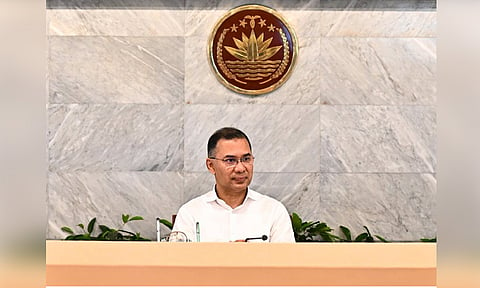
Prime Minister Tarique Rahman’s decision to make Malaysia the destination of his first official foreign visit came as a surprise to many observers. Traditionally, the first overseas trip of a newly elected head of government is viewed as a statement of foreign policy priorities. In Bangladesh’s case, most prime ministers have chosen China as their first destination, reflecting the country’s economic interests and geopolitical calculations.
As Bangladesh grapples with the challenge of balancing relations between China and India, its two largest trading partners, many were keenly watching where Tarique Rahman would make his first visit. Instead of opting for either of the regional giants, he chose a middle path by selecting Malaysia, with a visit to China scheduled to follow shortly afterward.
Diplomats familiar with the significance of the two visits have described the decision as a smart and nuanced move. While Malaysia may not wield the same geopolitical influence as China or India, it occupies a uniquely important place in Bangladesh’s economic landscape. The sequencing of the visits allows Dhaka to send a message of strategic balance while simultaneously advancing key economic interests.
The Malaysia visit also represents continuity in foreign policy. Malaysian Prime Minister Anwar Ibrahim was the first foreign head of government to visit Bangladesh after the establishment of the Interim Government, arriving in Dhaka on October 3, 2024. Tarique Rahman’s visit can therefore be seen as a reciprocal gesture, reinforcing a relationship that gained renewed momentum during the transitional period.
Naturally, much of the international attention surrounding the Prime Minister’s twin visits will focus on China because of Beijing’s economic weight and geopolitical influence. Foreign Secretary Asad Alam Siam has already indicated that between 15 and 17 agreements or instruments could be signed during the China visit. This would mark a significant expansion of bilateral cooperation, considering that nine instruments were signed during Chief Adviser Professor Muhammad Yunus’s visit to China last year.
By comparison, only a limited number of agreements are expected to emerge from the Malaysia visit. At first glance, this may create the impression that the Malaysia stop is merely a routine engagement or even a diplomatic prelude designed to soften the optics of the China visit. Yet such an interpretation would overlook Malaysia’s considerable economic significance for Bangladesh.
Malaysia is home to one of the largest Bangladeshi expatriate communities in the world. Nearly one million Bangladeshis live and work there, contributing significantly to both economies. At the same time, a powerful recruitment syndicate operating across the two countries has long complicated the migration process and created hardships for workers. The Interim Government worked extensively to dismantle these networks, but the problem is deeply entrenched and cannot be resolved within a year or two. Tarique Rahman’s visit provides an opportunity to build on that effort and push the reform agenda forward.
Beyond migration issues, the visit could generate tangible economic benefits. Chief Adviser Professor Yunus’s visit to Malaysia last year laid important groundwork, and the new government’s commitment to policy continuity may now help translate those discussions into concrete outcomes.
I had the privilege of accompanying Chief Adviser Professor Yunus during that visit in my capacity as Deputy Press Secretary and witnessed firsthand how he brought together some of Malaysia’s most influential business leaders to explore investment opportunities in Bangladesh.
One particular gesture from that visit remains memorable. Throughout the two-day tour, Sharifah Sofia Syed Mokhtar Shah, daughter of Malaysian business magnate Syed Mokhtar Al-Bukhary, was frequently seated alongside the Bangladesh delegation, taking notes during meetings that did not involve confidential discussions. For many members of the delegation, this initially seemed unusual. We were unaccustomed to seeing a representative from the host country participating from our side of the table.
We later learned that Professor Yunus had allowed Sofia to join the Bangladesh delegation at the request of her father, who wanted his daughter to learn statesmanship from the Nobel laureate. While it may have appeared to be a small gesture, those familiar with Al-Bukhary’s stature in Malaysia’s business community understood its significance. It suggested the potential beginning of a deeper economic partnership between Bangladesh and Malaysia.
Al-Bukhary, one of Malaysia’s wealthiest businessmen, controls MMC Corporation, one of the country’s largest infrastructure and construction conglomerates, and also has major interests in Proton Holdings. MMC is the largest shareholder of Saudi-based port operator Red Sea Gateway, the first foreign company to become involved in the management of Bangladeshi ports.
The fact that Al-Bukhary entrusted his daughter to learn from Professor Yunus was widely interpreted as a reflection of the close relationship between the two men. Such personal relationships can often prove valuable in international business and diplomacy.
Last year, when Bangladesh suspended negotiations with DP World over the management of the New Mooring Container Terminal because of conditions deemed unacceptable, the Chief Adviser immediately instructed relevant authorities to engage with MMC Corporation as a possible alternative investor. His relationship with Al-Bukhary gave Bangladesh confidence that it would not be left vulnerable to a monopoly situation or pressured into accepting unfavorable terms.
Several leading Malaysian business figures met the Chief Adviser during that visit, including Tengku Muhammad Taufik, President and Group CEO of Petronas; Amirul Feisal Wan Zahir, Managing Director of Khazanah Nasional; Syed Faisal Albar, Chairman of Proton Holdings; and Lim Wee Chai, Executive Chairman of Top Glove Corporation. All expressed interest in expanding business ties with Bangladesh. The time has now come for Bangladesh to build on those conversations and convert interest into investment.
Another issue that received particular attention during the visit was Malaysia’s support for establishing a halal industrial park in Bangladesh. The global halal products market is currently valued at around $3 trillion and is projected to exceed $5 trillion by 2030. Malaysia, which operates at least 14 halal industrial parks, is one of the industry's global leaders.
For many Bangladeshis, the concept of halal products remains largely associated with food. Malaysian business leaders, however, highlighted a much broader range of opportunities. Bangladesh is already one of the world’s leading garment exporters, yet little attention is paid to whether dyes and other production inputs comply with halal certification standards. The introduction of halal-certified manufacturing processes could enable Bangladesh to access new consumer markets and diversify beyond its traditional export destinations.
Bangladesh has been working toward this goal for several years, and Tarique Rahman’s visit could provide the political momentum needed to accelerate progress. In that sense, the Malaysia trip should not be viewed merely as a symbolic stop before China. It represents an opportunity to deepen economic engagement, improve migration governance, attract investment, and advance new sectors of trade. While China may dominate the headlines, Malaysia could ultimately deliver some of the most practical and immediate benefits for Bangladesh.
The writer is the Executive Editor at Daily Waadaa