
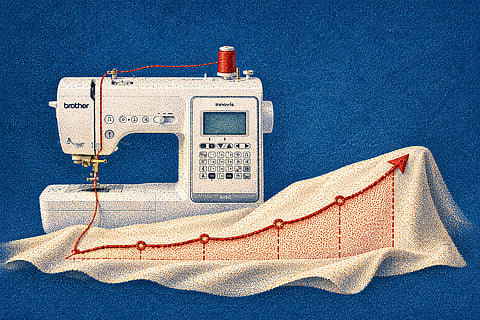
Raising ready-made garment workers’ wages is good economics
Ready-made garment (RMG) workers clashed with police while protesting for higher wages, leading to at least 57 arrests. The protesters demand 30,000 taka ($242) monthly, more than double their current pay of about 12,500 taka, set in 2023. The country’s main garment and knitwear manufacturers’ associations warned that “prolonged unrest could disrupt production, delay export shipments and affect Bangladesh’s commitments to international buyers”.
The home minister said the government was taking action to stop the protests: “Those engaging in unlawful activities and conspiracies under the guise of labour movements will be tackled with an iron hand”. He also said that the prime minister had instructed, after an emergency cabinet meeting, to “ensure workers’ rights and improve their living standards”.
Perhaps the prime minister understood that ensuring workers’ rights and improving their living standards is good economics.
Wrong questions asked
Some have questioned: Why should Bangladesh pay a $242 minimum wage to RMG workers while India pays $124 and Pakistan $135? This is the wrong question for at least three reasons.
First, Bangladesh’s annual inflation rate has been consistently higher than India’s. For example, since 2023, when the current minimum wage of 12,500 taka was set, Bangladesh’s average annual inflation rate has been around 9% against India’s 4.25%, while Pakistan’s annual inflation rate dropped from 29.2% to 7.1%, according to the Asian Development Bank.
Second, Pakistan’s rupee is weaker; $135 converts into approximately 25,293 Pakistani rupees. With lower inflation, it translates into higher purchasing power. The Indian rupee is stronger; $124 translates into approximately 11,688 Indian rupees, slightly less than Bangladesh’s minimum wage. But its inflation rate is significantly lower than Bangladesh’s, resulting in a substantially higher real wage (2,750 Indian rupees, nearly double Bangladesh’s 1,390 taka). Comparing Bangladesh’s minimum wage with Pakistan and India can therefore be misleading.
Third, neither India nor Pakistan is Bangladesh’s main competitor. India’s share of global RMG exports is 3% and Pakistan’s remains between 1.5% and 2%, compared with Bangladesh’s 6.8%. Bangladesh’s competitors are China and Vietnam, and to some extent Cambodia, with their respective shares of global RMG exports at approximately 27.4%, 6.1% and 2%. In 2023, minimum wages in these three countries were $826, $328 and $256, respectively.
The right questions are: What would be the consequences of a higher minimum wage for overall inflation? Is the pace of minimum wage adjustments consistent with productivity improvements? Can the sector remain competitive internationally if it faces recurring industrial unrest and cannot improve productivity fast enough to outpace wage increases?
Good economics
Looking after workers is good economics. Robert Bosch, the German industrialist, engineer and inventor who founded Robert Bosch GmbH, introduced eight-hour working days in 1906, free Saturdays in 1910 and other benefits for his workers. He said: “I don’t pay good wages because I have a lot of money; I have a lot of money because I pay good wages.”
Henry Ford, the American industrialist and founder of the Ford Motor Company, doubled his workers’ pay to $5 a day in 1914 and shortened shifts from nine hours to eight. In justifying his decision, he said: “Of course the higher wage drew a more productive worker. But that wasn’t the real reason. The fact was, it was no good mass-producing a cheap automobile if there weren’t masses of workers and farmers who could afford to buy it.”
Both Bosch and Ford realised that better pay and working conditions attract better workers and raise productivity. They also knew that better pay and working conditions lead to higher sales and revenues. Overall profits can therefore rise despite higher wages. Both companies not only survived but went on to become leading global companies.
Singapore, which began its industrialisation by taking advantage of cheap labour, adopted a high-wage policy in the early 1980s to move towards higher-value-added activities. It maintained its dynamism not by cutting wages and working conditions, but by using higher wages to push companies to upgrade skills, optimise production processes and adopt new technologies. As productivity improved, the additional costs arising from wage adjustments were offset while businesses’ competitiveness improved.
In recent years, China and Vietnam have followed a similar path. They are using higher minimum wages to push out less productive activities and diversify their economies. This also leads to higher living standards.
Economy-wide benefits
RMG is Bangladesh’s largest industrial employer. A rise in the minimum wage of RMG workers will help expand Bangladesh’s middle class and reduce rising inequality. Both will expand domestic demand for consumer goods and services, generating economy-wide spillover effects and driving the growth of other industries and high-value services.
This is an important consideration in light of recent global findings by Gordon Hanson, Dani Rodrik and Rohan Sandhu, reported in the International Monetary Fund’s (IMF) Finance & Development (September 2026). They argue that export-led industrialisation has become a less dependable engine of mass employment. According to them, “The central challenge of economic development today is how to increase productivity in nontraded activity jobs, mostly in services, that do not require a standard college education.”
This observation matters given Bangladesh’s jobs crisis, with more than 26 lakh unemployed people, according to the Bangladesh Bureau of Statistics. Of them, around 8.9 lakh are graduates, representing 36% of educated youth (aged 15–24), according to the IMF.
Beyond a living wage
Raising minimum wages will not automatically translate into structural transformation or job growth. We need well-designed industrial policies, supported by reforms, especially in the financial sector, logistics, energy, and education and training.
As the experience of Singapore, China and Vietnam shows, a higher minimum wage complemented by appropriate reforms can be an effective industrial policy tool. The newly formed wage board therefore needs to consider not only issues related to a living wage but also the broader role of wages in industrial policy.
An ad hoc wage board formed after industrial action cannot achieve broader objectives. Following the examples of Singapore, Vietnam and Cambodia, Bangladesh should establish a permanent National Wages Council, a tripartite body representing the government, employers and workers, to provide a transparent and predictable roadmap for minimum wage adjustments.
--
Emeritus Professor Anisuzzaman Chowdhury is a former special assistant (for the Ministry of Finance) to the chief adviser of the interim government led by Professor Yunus. He held senior United Nations positions in economic and social affairs in New York and Bangkok. He has written extensively on East and Southeast Asian economies, including several books. Email: a.chowdhury@westernsydney.edu.au; anis.z.chowdhury@gmail.com.