
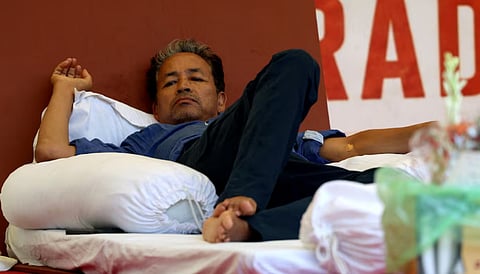
Sonam Wangchuk says he ended hunger strike to protect protesting students
Activist Sonam Wangchuk has said he ended his 26-day hunger strike without securing the resignation of India's Education Minister Dharmendra Pradhan because his immediate priority was to protect student protesters from legal action.
Wangchuk, 59, had been on an indefinite fast since June 28 in support of members of the satirical Cockroach Janta Party (CJP), who launched a "Sansad Chalo" march demanding accountability over alleged irregularities in competitive examinations, reforms in the education system and the resignation of Pradhan.
He ended the fast shortly after midnight on Thursday after the Indian government provided a written assurance that no cases would be filed against peaceful protesters. The government also agreed to hold a detailed discussion in Parliament on examination reforms and paper leaks and said it was considering compensation for the families of students who died by suicide following the alleged NEET paper leak.
His decision drew criticism from some supporters who questioned why he ended the protest without obtaining the minister's resignation.
In a YouTube video released late Friday, Wangchuk said Pradhan's resignation remained an important issue but was not his main focus during negotiations with the government.
"I don't consider it essential for me personally to bring about this resignation," he said in the video recorded from his hospital bed.
He argued that the government was already facing growing public criticism over the issue and expressed confidence that the minister would eventually step down.
"My focus was that students should not suffer. My main concern was legal action and FIRs. I did not think it was necessary for me personally to secure the minister's resignation," he said, adding that the movement would continue demanding Pradhan's resignation.
Wangchuk also denied allegations that he had struck a deal with the government to end the fast.
He said he feared a possible crackdown on protesters and wanted to prevent violence or legal action against students.
"I felt that if I ended my fast and appealed for peace, perhaps the situation could be defused," he said, recalling a security crackdown in Ladakh in September 2025.
Responding to criticism over ending the fast in the presence of Union ministers JP Nadda and Jitendra Singh, Wangchuk said the circumstances surrounding the negotiations had been misunderstood.
"If I had to make a deal, would I have remained hungry for 26 days? Could I not have struck a deal sitting in an air-conditioned room instead of fasting in Delhi's heat?" he asked.
According to Wangchuk, the ministers met him at Medanta Hospital in Gurugram and agreed to consider compensation for families of students who died by suicide following the alleged NEET paper leak and to hold a parliamentary discussion on reforms and accountability in the examination system.
He said he refused to end the fast until the government gave a written assurance that peaceful protesters would not face legal action.
"They initially agreed to compensation and discussion in Parliament but were not ready to assure that no cases would be filed against protesting students. They offered only a verbal assurance. I insisted on a written assurance and did not relent until they agreed," Wangchuk said.
He also claimed he had hoped to end the fast in the presence of MPs, CJP members and representatives from Ladakh, but many of them were not allowed to meet him before the ministers arrived late at night.
Source: NDTV