
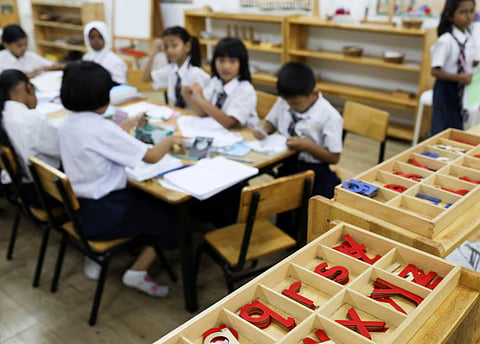
Rohingya schools in Malaysia face closures amid online surge in hate speech
Nur is a 12-year-old Rohingya Muslim refugee in Malaysia who has stopped going to school since June, after two men threatened to beat her on her way to class.
"Why do you want to go to school? Do you want to take over our country?" they asked, according to Nur, whose family declined use of her full name for fear of repercussion.
Nur is just one of many Rohingya children to face harassment and threats that have prompted refugee schools across Malaysia to close, say rights groups and educators.
"Children are so scared that they're afraid to leave the house," said Sharifah Shakirah, a Rohingya community activist brought up in the southeast Asian nation.
"You're not just harassing a child for a day or two, you're creating a lasting trauma."
At least nine schools have shut nationwide, Reuters checks show, after online hate speech and misinformation targeting the Rohingya led to tougher controls on the community and raised tech regulation concerns.
The home affairs ministry did not respond to a request for comment on the school closures or hate speech campaign.
Malaysia does not officially recognise the Rohingya as refugees, branding them illegal migrants, though about 120,000 are registered with the United Nations refugee agency.
Muslim-majority Malaysia has long sympathised with the persecuted minority from Myanmar, but opinion soured during the COVID-19 pandemic amid accusations refugees were spreading the virus, disrepecting cultural norms and competing for jobs.
Malaysians "have begun feeling burdened by issues arising from managing the Rohingya community", Deputy Foreign Minister Lukanisman Awang Sauni told parliament last week.
Fresh invective spread in May on social media run by Meta Platforms Inc, as well as Bytedance's TikTok, after hygiene concerns linked to the Muslim ritual of cattle slaughter by one Rohingya group.
A viral online petition urging the government to "remove" Rohingya refugees was taken down in June after rights groups raised the alarm, but not before it garnered nearly half a million signatures.
"What we're seeing now is 100 times worse than it was during COVID," said Sharifah, the community activist.
Some posts reviewed by Reuters exhorted violence against Rohingya refugees, including children. One sub-topic on Meta-owned Threads was titled "Lempang Rohingya", or "Slap Rohingya" in Malay, for example.
Some influencers encouraged users to film Rohingya communities and report their locations to authorities.
Despite social media sentiment, the government cannot arbitrarily deport refugees, Home Minister Saifuddin Nasution Ismail said in June, adding it would respond by "balancing national security with humanitarian values".
He did not give details.
Free speech advocacy group Article 19 said the online campaign had boosted scrutiny of Rohingya communities, leading to investigations, raids and school closures.
But it did not observe any human rights-based approaches towards tackling attacks, a spokesperson said, adding, "The government's punitive measures are causing more harm than reducing tension and harassment."
The U.N. refugee agency said it was concerned by rising online hate speech, disinformation and dehumanising narratives targeting Rohingya and other refugees.
"We continue to monitor the situation closely and to support measures that reduce risks for refugees and host communities," it added in a statement, without mentioning the school closures.
Authorities have shut down Rohingya-linked businesses and schools they say are operating illegally.
Refugees cannot legally work in Malaysia, and their children are barred from the national education system, leaving many dependent on schools run by non-government bodies or informal learning centres.
After Nur's experience, her teacher and the school's operator suspended classes indefinitely on safety concerns. Two nearby refugee schools also closed.
Rohingya children have been chased off public playgrounds, said the teacher, who founded the school in 2022 to offer young people a basic education to prepare for possible re-settlement elsewhere or a safe return home.
Himself a Rohingya refugee, he rejected accusations that the school was encouraging refugees to settle permanently in Malaysia or take jobs from locals.
"Many accuse us of breaking Malaysian laws," said the school founder, who sought anonymity for reasons of security. "For me, starting this school is one way I can teach others how to understand and obey the law."
Authorities closed a school in the northern state of Kedah this month for lacking proper permits after videos of its premises were posted online, said one of its teachers, who spoke on condition of anonymity.
At least nine schools teaching Rohingya children have closed for safety reasons or were shut by authorities after complaints on social media, said teachers and community leaders who declined to be interviewed, fearing repercussions.
Teachers at three schools still operating said they took precautions to avoid being targeted, including telling students not to wear uniforms and cancelling outdoor activities.
The longer-term impact of school closures will be to worsen social problems, such as child marriage among Rohingya girls and vagrancy, said activist Sharifah.
"Many people complain about Rohingya children begging for money on the streets," she added. "There will only be more of them if schools are closed."
Activists say the online campaign has revived questions over social media platforms' ability to curb hate speech and violent rhetoric.
Some posts flagged to Meta and TikTok were removed, Article 19 said, but much remained online. Meta removed seven of 10 items flagged to it by Reuters across Facebook, Instagram and Threads, while TikTok removed eight of 11.
Despite policies on harmful content, enforcement by the social media firms is inconsistent, Article 19's spokesperson said, adding that AI moderation tools often struggle with coded language, visual content and linguistic nuances.
Meta and TikTok use a combination of automated detection and human review to enforce policies against hate speech and conduct on their platforms. TikTok also has safety features reminding users to reconsider potentially harmful comments.
For now, the children denied classes have few options, with a tearful Nur telling Reuters, "If I don't go to school, I won't be able to learn anything, and I can't become anything."