
Could missionary’s killer walk free in India after 27 years? BBC reports
More than 27 years after one of India’s most notorious cases of anti-Christian violence, the man convicted of murdering Australian Christian missionary Graham Staines and his two young sons could be released from prison.
According to the BBC, India’s Supreme Court is set to consider a petition seeking the release of Dara Singh, whose real name is Rabindra Kumar Pal. Singh has been serving a life sentence for the 1999 killings and has been in prison since his arrest in 2000.
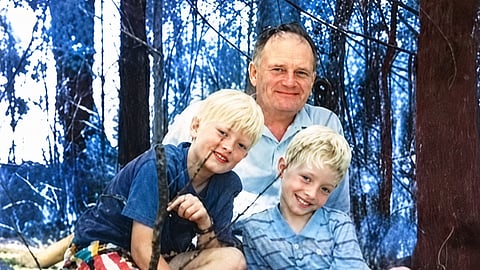
Staines, who had spent around three decades working with people affected by leprosy, was burned alive along with his six- and 10-year-old sons, Philip and Timothy, in Odisha, then known as Orissa.
The 1999 killings
Staines lived in Baripada in Odisha’s Mayurbhanj district, where he worked among tribal communities.
On the night of January 22, 1999, he and his two sons were sleeping in their vehicle after attending a Christian gathering in Manoharpur village in neighbouring Keonjhar district.
According to the BBC, a mob of between 60 and 70 people surrounded the vehicle, set it on fire and prevented the occupants from escaping.
Singh, who was accused of leading the mob, went into hiding after the killings. Police announced a reward of 800,000 rupees—around $18,000 at the time—for information leading to his arrest. He was eventually captured during a raid on a jungle hideout in 2000.
Singh later denied killing Staines and his sons but acknowledged that he had led a campaign against Christian missionaries.
In a 2000 interview with India Today, he claimed missionaries were converting Hindus through “deceit and inducements” and said he considered it his responsibility to oppose them.
Conviction and other killings
A trial court sentenced Singh to death in 2003, while 12 others received life imprisonment. The Odisha High Court later commuted his death sentence to life imprisonment and released 11 other accused, citing insufficient evidence against them.
In January 2011, India’s Supreme Court upheld Singh’s life sentence and rejected a plea to restore the death penalty.
The Staines killings were not the only crimes for which Singh was convicted.
In 2007, he received life sentences for two other attacks against religious minorities committed in 1999. In one case, he was convicted of leading a mob that set fire to a church and killed Catholic priest Arul Das with an arrow as he attempted to escape.
He was also convicted of beating and burning to death Muslim garment trader Shaikh Rahaman.
Police had additionally registered 10 cases alleging Singh’s involvement in hijacking trucks carrying cows belonging to Muslim traders. Singh denied personally taking part in the incidents but admitted being active in a campaign against cow slaughter and illegal cattle trading.
Church leaders had accused the Hindu hardline organisation Bajrang Dal of being behind the attacks. Singh denied being a member, while an inquiry commission headed by retired Supreme Court judge DP Wadhwa later concluded that he had acted alone.
Plea for release
According to the BBC, Singh filed a remission petition before the Supreme Court in July 2024, arguing that he had already spent more than 25 years in prison and should be released.
In his petition, Singh claimed that his conduct in prison had been good and expressed remorse for his actions.
He described the killings as the result of the “fervour of youth”, saying his “psyche momentarily lost restraint” and that he had no personal animosity towards the victims.
The Supreme Court subsequently directed the state government to consider his plea. However, authorities have yet to communicate a final decision to the court.
At a hearing on August 19, the state told the court that its Sentence Review Board was still waiting for additional paperwork and sought another adjournment.
The two-judge bench of Justices Manoj Misra and Vijay Bishnoi expressed frustration over repeated delays and warned that if the board failed to decide the matter by September 2, the court would take up the issue itself.
“You take a decision, whichever way you want. If you do not take a decision, then we will,” the judges said.
Concerns among Christians
The possibility of Singh's release has caused unease among sections of India's Christian community, particularly because of his statements following the killings.
In his 2000 India Today interview, Singh reportedly said he had “no regrets” over the deaths of Staines and his sons and said he would continue opposing Christian missionaries and cow slaughter if released.
The BBC noted that the possibility of his release has revived painful memories within India's Christian minority, which numbers around 30 million people.
Staines' widow, Gladys, who remained in India with their daughter Esther until 2004, had previously said she forgave Singh.
“Forgiveness opens up the path of healing,” she said.
However, human rights activist and Christian political campaigner John Dayal has argued that concerns among religious minorities in Odisha cannot be dismissed, given the state's history of communal violence.
Writing for the Union of Catholic News, Dayal said remission after decades in prison was not unusual in India and that the principle behind it—that punishment should allow for reform and eventual return to society—was humane.
But he also pointed to the 2008 Kandhamal violence in Odisha, in which dozens were killed and tens of thousands displaced.
“The Staines murders were not an ordinary homicide but a public, theatrical act of terror, intended to be seen and understood as a warning,” Dayal wrote.
The question now, he argued, is not simply whether Singh will eventually be released, but whether the authorities handle the decision in a way that provides reassurance to religious minorities.