
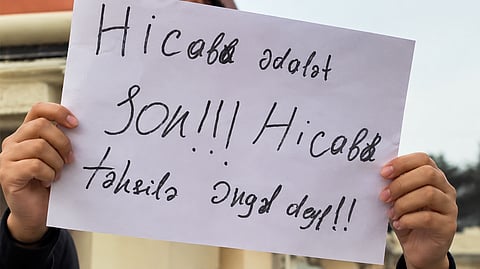
Hijab row rocks Muslim-majority Azerbaijan as many girls are barred from schools
Azerbaijan is facing protests over restrictions on Islamic headscarves in schools, with reports that hijab-wearing girls have been denied entry to classrooms and 37 people detained amid demonstrations. Reuters and JAMnews reported the developments, which have also triggered a diplomatic disagreement between Azerbaijan and its close ally Turkey.
The dispute began after Azerbaijan introduced new school uniform rules in September, prohibiting clothing that deviates from the official dress code or conflicts with the secular character of state education. Although the rules do not explicitly mention the hijab, school administrations have reportedly used them to prevent students wearing Islamic headscarves from attending classes.
Videos shared from several schools in and around the capital, Baku, show students gathering at school entrances in solidarity with hijab-wearing classmates. Some students have reportedly refused to attend classes, while parents have threatened school boycotts to demand that girls be allowed to continue their education without removing their headscarves, according to JAMnews.
The protests have also raised concerns about the impact of the restrictions on female teachers who wear headscarves.
37 detained as authorities defend restrictions
Azerbaijan's Interior Ministry announced on October 12 that 37 people had been detained over incidents linked to the enforcement of school uniform rules.
The authorities accused the detainees of provoking confrontations with education workers, damaging educational institutions and attempting to disrupt school operations and traffic. A criminal case was opened under Article 233 of the country's Criminal Code, which addresses organising or participating in actions that disrupt public order.
However, questions remain over the legal basis for excluding students from classes and whether any minors were among those detained. The number of students missing school because of the restrictions is also unknown.
The government maintains that the rules are intended to uphold a uniform dress code and secular education. Azerbaijan's Cabinet of Ministers adopted Resolution No. 309 on September 21, setting out the clothing requirements.
The rules have prompted debate over whether enforcing a secular dress code justifies restricting children's access to education because of their religious clothing.
Azerbaijan tells Turkey not to interfere
The dispute has spilled into relations between Azerbaijan and Turkey, two close allies whose ties are often described by the slogan “one nation, two states”.
On Tuesday, Azerbaijan's governing Yeni Azerbaijan Party (YAP) criticised Oktay Saral, an adviser to Turkish President Recep Tayyip Erdogan, and lawmakers from Turkey's ruling AK Party for opposing the restrictions.
Saral described denying education to students who wear headscarves as “unacceptable” and urged Azerbaijan to reverse the policy, arguing that the hijab is an expression of religious belief rather than an obstacle to education.
In response, YAP called his remarks “populist and irresponsible”, arguing that Azerbaijan's rules were based on equality, secularism and the rule of law.
The party warned Ankara against using Azerbaijan's education policies for political purposes, saying that close relations between the two countries did not justify interference in each other's domestic affairs.
YAP also defended Azerbaijan's close relations with Israel, saying they were based on international law and mutual interests.
A wider debate over secularism and religious freedom
Azerbaijan is a predominantly Muslim country whose constitution separates religion from the state and guarantees freedom of religion. Its government has defended the school uniform requirements as part of its commitment to secular education.
However, the latest controversy has revived questions about the limits of state authority over religious expression, particularly when restrictions affect children's ability to attend school.
JAMnews reported that Azerbaijan has witnessed earlier protests against attempts to restrict the hijab in educational institutions, including demonstrations in 2011 that led to arrests and criminal proceedings.
The latest protests place the government under renewed pressure to explain how the uniform rules are being implemented and what legal grounds schools have for denying students access to classes.
For families demanding that their children be allowed to study while wearing religious headscarves, the central issue is whether a secular education system can enforce a uniform dress code without compromising access to education and freedom of religious expression.