
In an Egypt village, generations of Palestinians denied a normal life
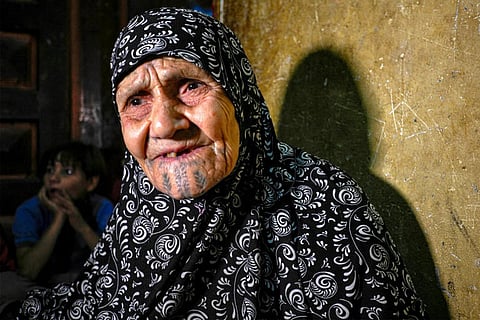
Shamma Abu Hussein may be the last person in her refugee village to have lived in historic Palestine. Now living in Egypt, she has watched three generations of her family grow up in legal limbo.
She was among the hundreds of thousands of Palestinians who fled or were expelled during the creation of Israel in 1948. Their descendants now number in the millions.
Abu Hussein fears that the devastation of the Gaza war and statements by Israeli ministers calling for Palestinians to be expelled from the territory signal a repetition of that history.
"After all the suffering they've endured," the 90-year-old said, "they now want to uproot them from their homes."
"I remember what I went through," she told AFP from her modest brick house in Geziret Fadel, a village surrounded by fields and irrigation canals in Egypt's Sharqiya province, about an hour northeast of Cairo.
She was recalling her family's flight from Beersheba, now in southern Israel, where they lived before fleeing the hostilities surrounding Israel's creation, an event Palestinians remember as the Nakba, or catastrophe.
One evening, as flames lit up the sky, elders rushed the children onto camels and into the desert. Abu Hussein's family travelled for days without food or water before reaching Egypt. Her mother died along the way.
The settlement where they eventually found refuge has since grown into a community of around 4,000 Palestinians.
Many residents have spent their entire lives in Egypt, yet say they face bureaucratic barriers to accessing education, healthcare and other public services because they are treated as foreigners rather than citizens.
Generations in limbo
Inside her home, the wiry Abu Hussein sat on a worn sofa, a faded Bedouin tattoo tracing her chin.
Dozens of grandchildren and great-grandchildren crowded the doorway and walls around her, helping fill in names and dates that had blurred in her memory over nearly a century.
Outside, narrow alleys wound between unfinished houses, while open sewers ran through the village's dirt lanes.
Residents spoke less about returning to their ancestral homeland than about securing education, employment and stability.
"I was born in Egypt. My father was born in Egypt. My children were born in Egypt," said Selmi Soliman al-Namouli, a 63-year-old agricultural labourer and father of 10.
"But when it comes to paperwork, I am treated as a foreigner."
Namouli said the cost of renewing residency permits, which must be paid in US dollars, along with school fees and other administrative expenses, placed a heavy burden on his family. He could not afford to send his academically gifted daughter, Asmaa, to university.
His 25-year-old nephew, Farid Khaled al-Namouli, also gave up on higher education.
"When I reached preparatory school, I started to love education and wanted to continue," he said. "But I kept running into obstacles with the paperwork."
He left school and found work at a clothing shop in the village, where many residents have been unable to complete their education.
'Ongoing Nakba'
The Namoulis are far from alone, according to Lubnah Shomali of Palestinian refugee rights organisation BADIL, who said Palestinians across Egypt face similar challenges.
Researchers estimate that around 50,000 Palestinians displaced by earlier conflicts were living in Egypt before the latest Gaza war. Since the conflict began, more than 100,000 others have arrived.
The UN agency for Palestinian refugees, UNRWA, has 3.5 million registered refugees in Jordan, Syria and Lebanon.
The Gaza war has revived fears of another Nakba, but Shomali said Palestinians were already experiencing one.
"The most apt description of the situation for Palestinians is an ongoing Nakba because the displacement continues," she told AFP, adding that generations of Palestinians had been trapped in a "coercive environment" that restricted their access to education, healthcare and other basic rights.
Egyptian officials have repeatedly said the country has provided medical care and education to Palestinian refugees and opposed any attempt to permanently displace them from their land.
Under former president Gamal Abdel Nasser, Palestinians in Egypt generally enjoyed access to education and employment on a footing similar to Egyptian citizens.
But regulations were tightened after Egypt signed its 1978 peace treaty with Israel and culture minister Yusuf Sibai was assassinated by members of the Palestinian militant group Abu Nidal.
Right of return
Unlike in Jordan, Syria and Lebanon, where UNRWA provides schooling, the agency has never operated in Egypt, said Dawn Chatty, an emeritus professor of anthropology and forced migration at the University of Oxford.
"Education is what gave Palestinians hope," Chatty told AFP.
"It allowed many refugees elsewhere in the region to find work abroad and support their families through remittances. But in Egypt, that did not happen."
Successive Egyptian governments have also rejected granting Palestinians citizenship, arguing that naturalisation could undermine their right of return, a position Shomali disputed.
The Egyptian foreign ministry did not respond to an AFP request for comment.
Despite the life she has built in Egypt, Abu Hussein has never abandoned the hope of returning home.
"We had a good life back home," she said. "If everyone here goes back, I'll go with them."